New Water Main Installation
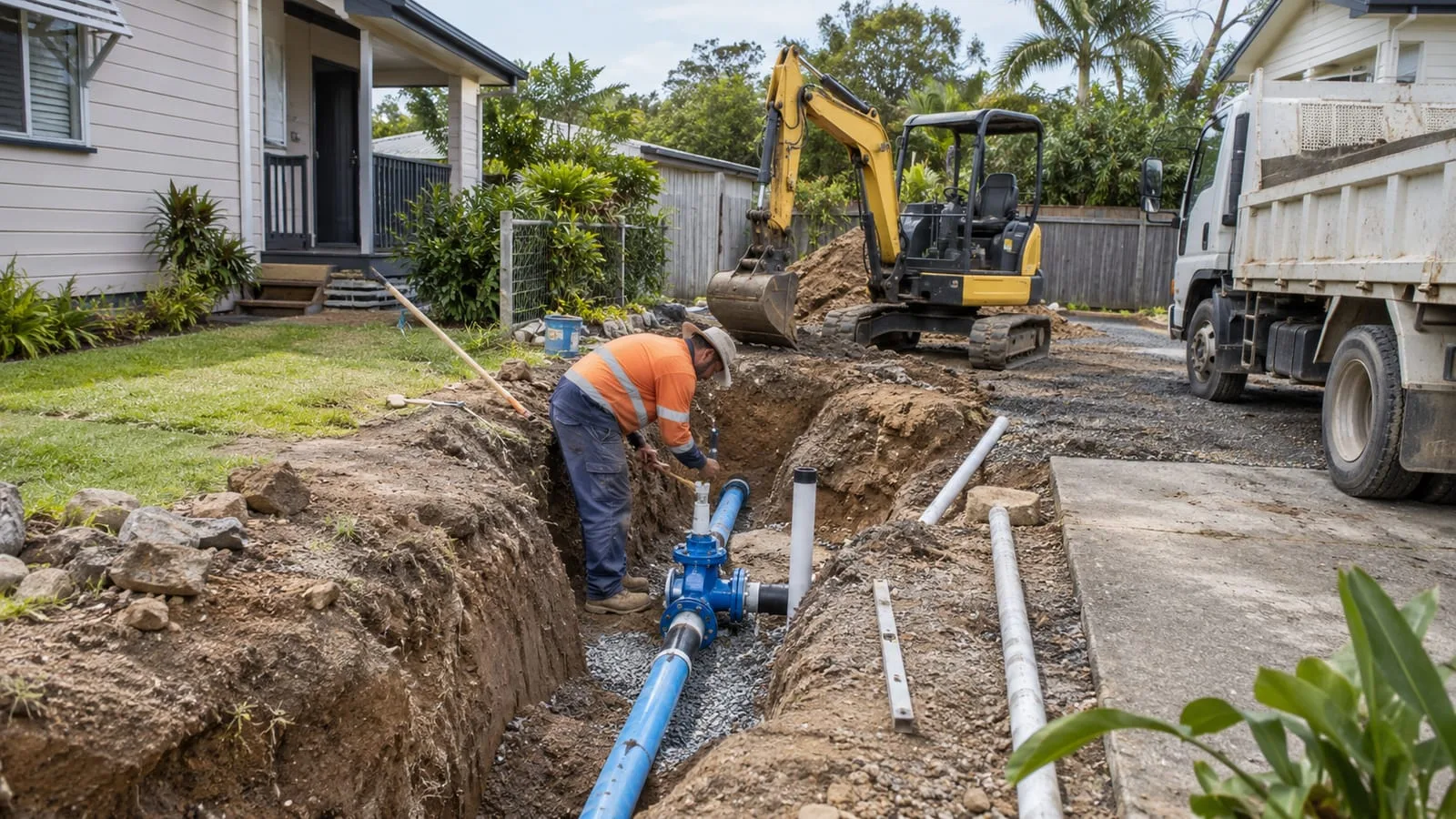
We install new water mains to service developments and properties, laying pipe to the required depth, level and alignment and completing connections to the existing network to current authority standards.


Discuss water supply extensions and servicing requirements for developments and larger sites.
Extending a water main is a common requirement for new developments and larger sites in Brisbane where the existing Queensland Urban Utilities supply does not reach. The work involves understanding current capacity, expected demand and the best route for new pipework. Good planning avoids delays later.
Because authorities, designers and contractors may all be involved, clarity at the start helps the project run smoothly. Share your plans and any servicing information you have with us, and we can help you plan the extension work. Early conversations with the relevant authorities can also help you understand what is required for your site.
Explore Brisbane Water Main Extensions and find the right starting point for your property.
We install new water mains to service developments and properties, laying pipe to the required depth, level and alignment and completing connections to the existing network to current authority standards.
We run water service lines from the main to your meter and property boundary, installing the necessary fittings and valves so your new home or building has dependable, safe water.
Our experienced crews excavate trenches, prepare bedding, lay pipe and backfill in carefully controlled layers, building a sound installation that withstands traffic loads, ground movement and long-term pressure for decades.
We test new mains for leaks and pressure, and coordinate flushing and disinfection requirements, so your extension is approved for service and delivers safe, clean drinking water to every connection.
We plan crossings carefully, protect existing services and reinstate roads, driveways and verges after pipe laying, minimising disruption to traffic and neighbours and leaving the whole site safe and tidy.
We install valves, hydrants and fittings where required by the design, positioning them for access and operation, and helping your water network meet performance and safety requirements from day one.
Before planning any extension, gather what is known about the existing water network near your site. Good information shapes the route, the size of pipe and the conversations with the authority.
| Request the plans | Ask for water main information near your lot and compare it with what is visible, such as meters, valve covers and hydrants. |
|---|---|
| Note pipe size and material | The size and age of the nearest main influence connection options and how much extra demand it can serve. |
| Photograph existing fittings | Pictures of meters, hydrants and valve covers around the site help designers understand the existing network. |
| Clarify requirements early | Ask the authority what applies to your development before design starts, so approvals are not left until after the drawings are done. |
The path a new main takes across a property affects cost, disruption and future access. A route that looks shortest on paper may be difficult once trees, slopes and structures are considered.
Walk the proposed route and note trees, retaining walls, existing services, steep banks and areas prone to boggy ground in the wet. Pipes generally need cover and clearance from other services and structures, and access must remain for future maintenance. Compare alternative routes with the designer, since a slightly longer path can sometimes avoid major obstacles.
Walking the line with the designer exposes obstacles such as large trees, retaining walls and drainage lines.
Pipes need adequate cover and separation from sewers, gas and power, which can limit where a route may go.
Avoid routes under future buildings or slabs, so the main remains reachable if repairs are ever needed.
Clay in storm season can make trenches unstable and difficult to access, so consider timing for excavation.
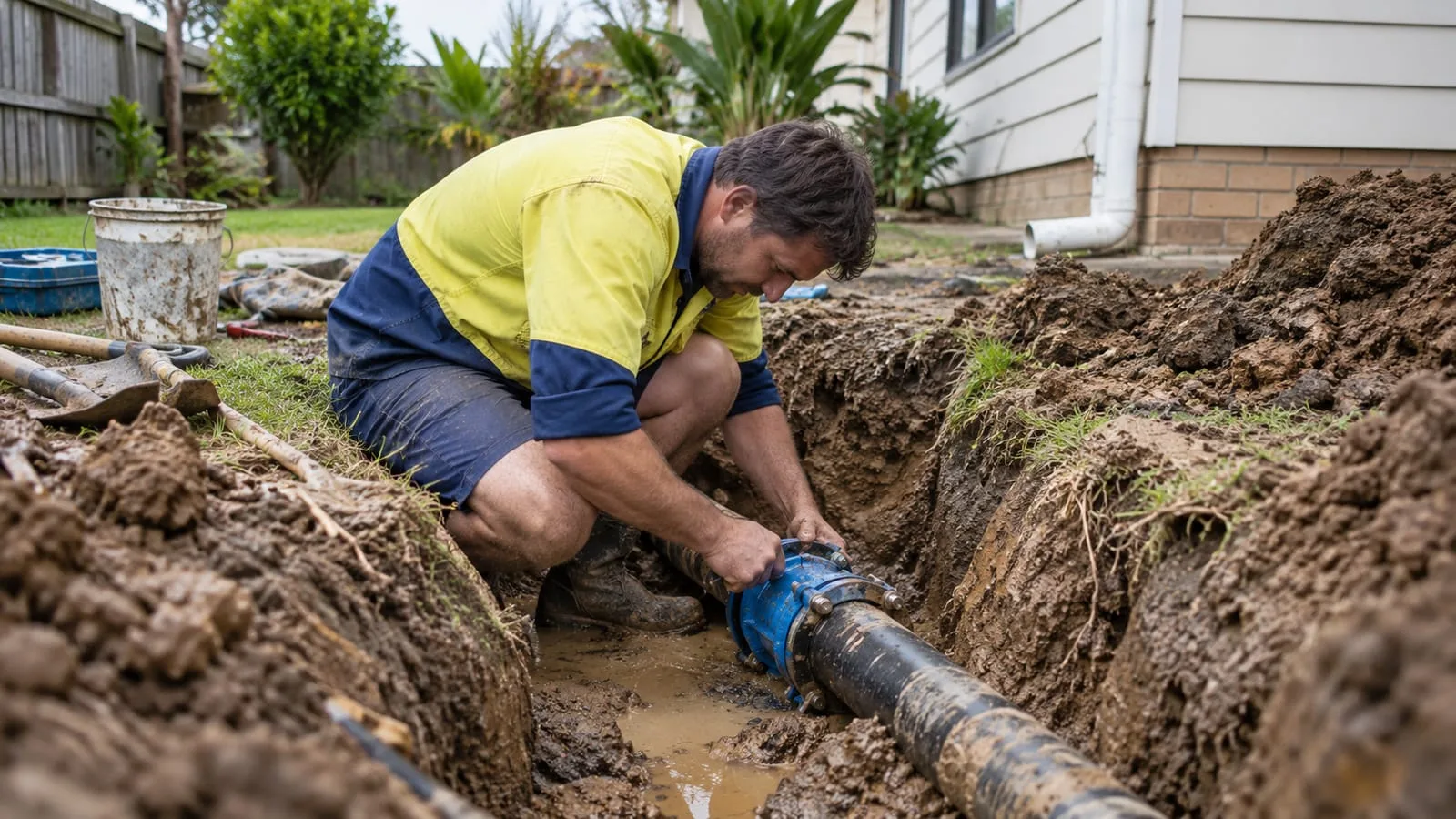
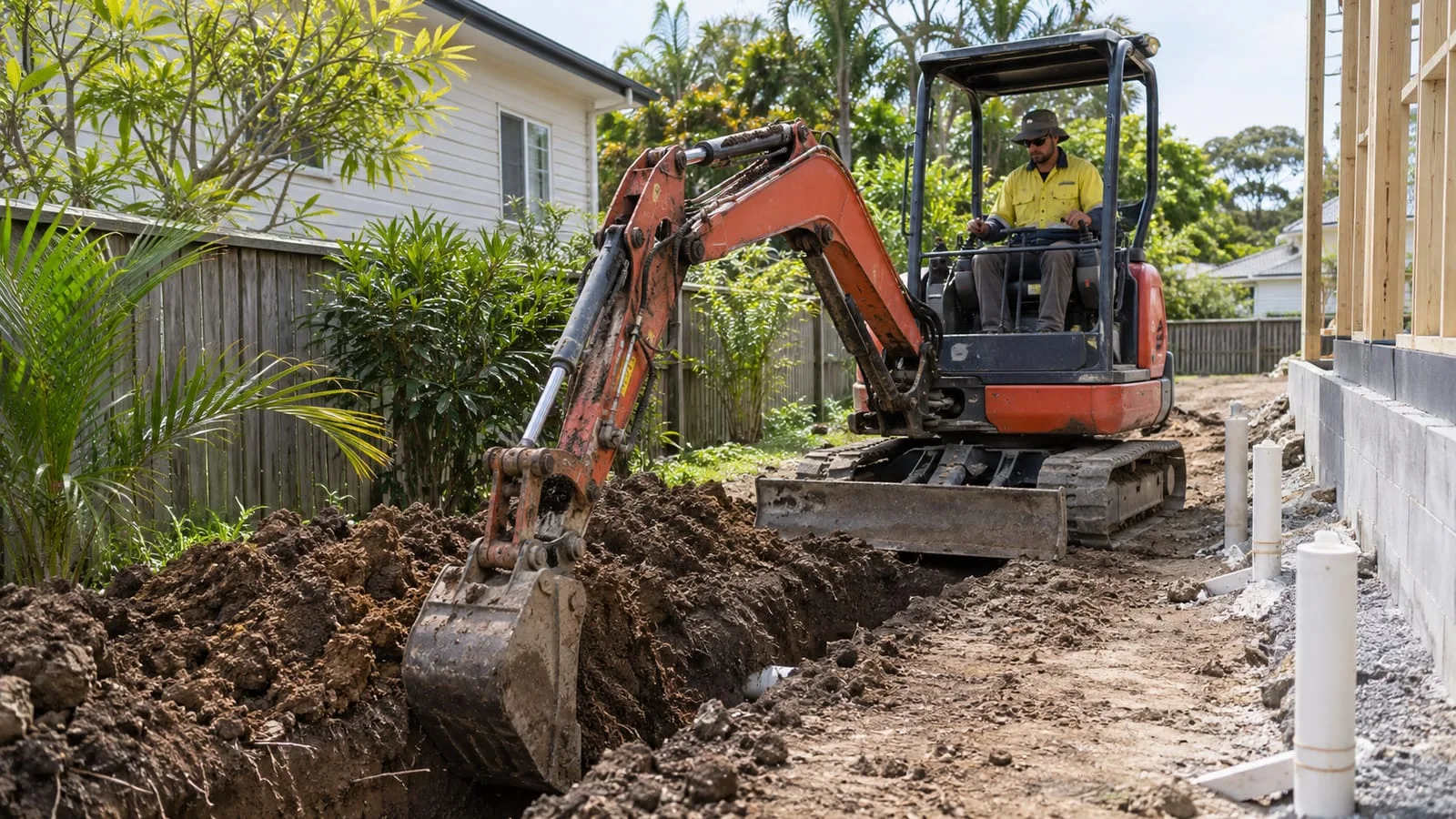
Extending a water main needs planning, approvals and skilled civil work. We deliver reliable water main extensions for developments and properties, built to authority standards and ready for long-term service.
Extending a water main combines civil work with authority approvals. Our crews trench, lay and connect mains in varied ground conditions, plan shutdowns carefully and reinstate surfaces neatly, then pressure test the finished line, so your development or property gets a reliable supply built to the water authority's standards with minimal disruption to neighbours.
Our crews have the equipment and know-how to trench, lay and connect water mains safely, handling varied local ground conditions, road crossings and restricted access with professionalism, skill and care.
We understand the specifications, testing and inspection requirements for water infrastructure, helping your project progress smoothly and on time through approvals and meet the standards of the relevant water authority.
We plan shutdowns carefully, communicate with affected neighbours and reinstate surfaces neatly, reducing inconvenience to residents and traffic while the new water main is installed, while keeping neighbours well informed.
We use quality pipe and fittings, correct bedding and thorough pressure testing, creating a water main that delivers reliable supply and avoids leaks, failures and expensive future repairs and replacements.